
ARTICLE IN ENGLISH –
CHECK OUT THE VIDEO –
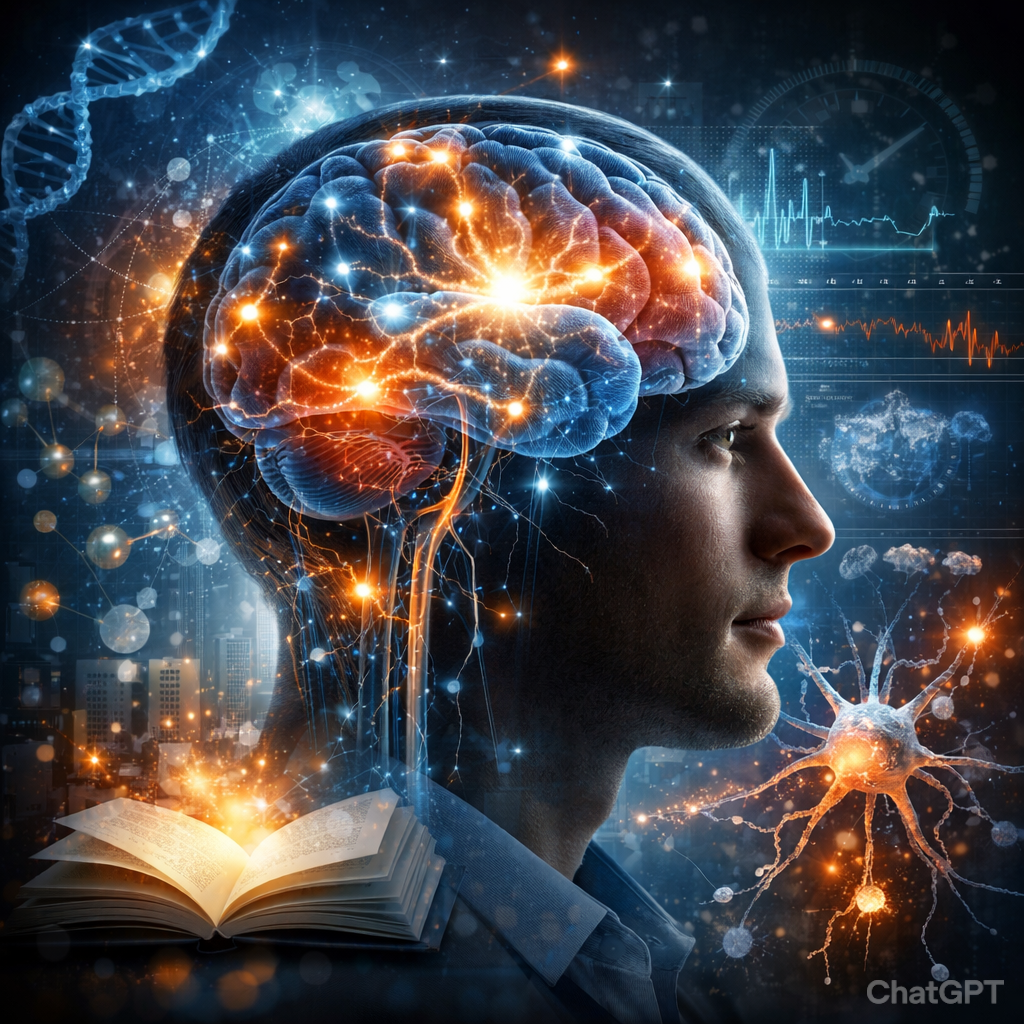
The Mystery of the Human Brain: How the Mind Works
How the human brain works remains one of the most fascinating questions in science. Despite centuries of research, the human mind still carries mysteries that intrigue neuroscientists, psychologists, and thinkers alike. From emotions and memories to creativity and decision-making, the brain orchestrates every aspect of our lives in ways we are only beginning to understand.
This article explores the science behind the human brain in a clear, engaging, and authoritative way. You will discover how the mind processes information, forms thoughts, shapes behavior, and influences reality — while uncovering practical insights that can transform how you think, learn, and live.
Why the Human Brain Still Feels Like a Mystery
Even in the age of artificial intelligence and advanced neuroscience, the human brain remains largely unexplored territory. Scientists estimate that we understand only a fraction of how neural processes create consciousness, identity, and subjective experience.
One reason for this mystery is complexity. The brain contains roughly 86 billion neurons, each forming thousands of connections. These networks generate trillions of interactions every second, making the mind one of the most sophisticated systems known.
- More complex than any computer ever built
- Capable of self-awareness and imagination
- Continuously rewiring itself through experience
- Influenced by biology, environment, and emotions
This combination of adaptability and unpredictability is what makes understanding the brain both challenging and deeply compelling.
How the Human Brain Works at a Fundamental Level
The Brain as an Electrical and Chemical Network
At its core, the brain functions as a bioelectrical system. Neurons communicate through electrical impulses and chemical messengers called neurotransmitters. These signals travel across synapses, forming the foundation of thoughts, sensations, and actions.
Every experience — from reading this sentence to recalling a childhood memory — is the result of neural patterns firing in coordinated sequences.
The Three Main Functional Layers of the Brain
Although highly integrated, the brain can be understood through three broad functional layers:
- Reptilian brain: Controls survival instincts like breathing and heart rate
- Limbic system: Processes emotions, motivation, and memory
- Neocortex: Responsible for reasoning, language, and abstract thought
This layered perspective helps explain why humans can be both deeply rational and emotionally driven — often at the same time.
How Thoughts Are Formed Inside the Brain
Thoughts are not isolated events but dynamic neural patterns shaped by memory, perception, and context. When you think about something, your brain activates networks associated with previous experiences and stored knowledge.
For example, imagining a beach may activate sensory regions linked to sound, smell, and emotion, even if you are physically far from the ocean.
The Role of Neural Pathways
The more a thought pattern is repeated, the stronger the neural pathway becomes. This principle — known as neuroplasticity — explains how habits form and why mindset plays such a powerful role in behavior.
- Repeated thoughts strengthen neural circuits
- New experiences create new connections
- Focused attention accelerates brain rewiring
This also reveals a powerful truth: your brain is not static. It evolves continuously based on how you think and what you do.
The Science of Emotions and the Mind
Where Emotions Come From
Emotions originate primarily in the limbic system, particularly structures like the amygdala and hippocampus. These regions evaluate stimuli rapidly, often before conscious reasoning occurs.
This is why emotional reactions can feel automatic — they are designed to prioritize survival, not logic.
Emotion vs. Rational Thinking
While the emotional brain reacts quickly, the prefrontal cortex is responsible for rational evaluation. The interaction between these systems shapes decision-making.
In high-stress situations, emotional circuits can override logical thinking. However, with training and awareness, individuals can strengthen cognitive control and improve emotional regulation.
Memory: How the Brain Stores and Retrieves Experiences
Memory is not stored like files in a cabinet. Instead, it is distributed across neural networks that encode sensory, emotional, and contextual information simultaneously.
Types of Memory
- Short-term memory: Temporary storage for immediate tasks
- Long-term memory: Consolidated through repetition and sleep
- Emotional memory: Strongly tied to survival and identity
Interestingly, memories are reconstructed each time they are recalled. This means they can evolve, distort, or strengthen depending on context.
Consciousness: The Ultimate Brain Puzzle
Consciousness — the awareness of being aware — remains one of the biggest mysteries in neuroscience. While scientists can map brain activity, explaining subjective experience is far more complex.
Some theories suggest consciousness emerges from large-scale neural synchronization. Others propose it arises from integrated information across brain networks.
What is clear is that consciousness is not located in a single area but emerges from the collaboration of multiple systems working in harmony.
Common Myths About the Human Brain
Popular culture has created several misconceptions about how the brain works. Understanding the truth can reshape how we approach learning and self-development.
Myth 1: We Use Only 10% of Our Brain
This is false. Brain imaging shows that most regions have identifiable functions and are active throughout the day.
Myth 2: Intelligence Is Fixed
Neuroplasticity proves that cognitive abilities can improve through deliberate practice and enriched environments.
Myth 3: Left-Brained vs. Right-Brained People
While hemispheres have specialized functions, most tasks involve integrated activity across both sides.
How Understanding the Brain Can Improve Your Life
Learning how the human brain works is not just an academic pursuit — it has practical, real-world applications.
Better Learning and Skill Development
Understanding neuroplasticity can transform how you learn. Techniques like spaced repetition, deep focus, and active recall align with how the brain naturally encodes information.
Emotional Intelligence and Self-Control
By recognizing the interaction between emotional and rational systems, individuals can develop greater resilience and decision-making clarity.
Productivity and Mental Performance
Optimizing sleep, stress management, and cognitive habits can significantly enhance mental performance, creativity, and focus.
- Sleep consolidates memory and clears neural waste
- Exercise boosts neurogenesis and mood regulation
- Mindfulness improves attention and emotional balance
The Future of Brain Science
Advancements in neuroscience are accelerating rapidly. Technologies like brain-computer interfaces, neuroimaging, and AI-assisted diagnostics are expanding our understanding of the mind.
In the coming decades, we may see breakthroughs in areas such as:
- Treatment of neurological disorders
- Memory enhancement technologies
- Personalized cognitive training
- Deeper understanding of consciousness
These developments could reshape healthcare, education, and even how we define human potential.
FAQ: Understanding How the Human Brain Works
How long does it take to understand the human brain?
Understanding the basics can take weeks of study, but mastering neuroscience is a lifelong journey. The field is constantly evolving as new discoveries emerge.
Can the brain really rewire itself?
Yes. Neuroplasticity allows the brain to form new neural connections throughout life, especially through learning, repetition, and meaningful experiences.
What part of the brain controls emotions?
The limbic system, particularly the amygdala, plays a central role in emotional processing, while the prefrontal cortex helps regulate emotional responses.
Is intelligence determined by genetics?
Genetics influence cognitive potential, but environment, education, and habits play a significant role in shaping intelligence over time.
Why is sleep important for brain function?
Sleep supports memory consolidation, emotional regulation, and neural detoxification, making it essential for optimal cognitive performance.
Final Thoughts: Unlocking the Power of the Human Mind
The mystery of how the human brain works continues to inspire scientists and thinkers across disciplines. While many questions remain unanswered, modern neuroscience has revealed a powerful truth: the brain is dynamic, adaptable, and deeply influenced by experience.
Understanding how the mind functions empowers individuals to take control of their cognitive and emotional lives. From improving learning and decision-making to enhancing creativity and resilience, brain awareness offers practical tools for personal growth.
As research advances, our understanding of the human brain will only deepen. And with each new discovery, we move closer to unlocking one of the greatest mysteries of existence — the extraordinary potential hidden within the human mind.
COPYRIGHT NOTICE.

This video was embedded from YouTube and is licensed under Creative Commons (CC BY), which permits its reuse.

Credit to the original author as required by the license.