
ARTICLE IN ENGLISH –
CHECK OUT THE VIDEO –
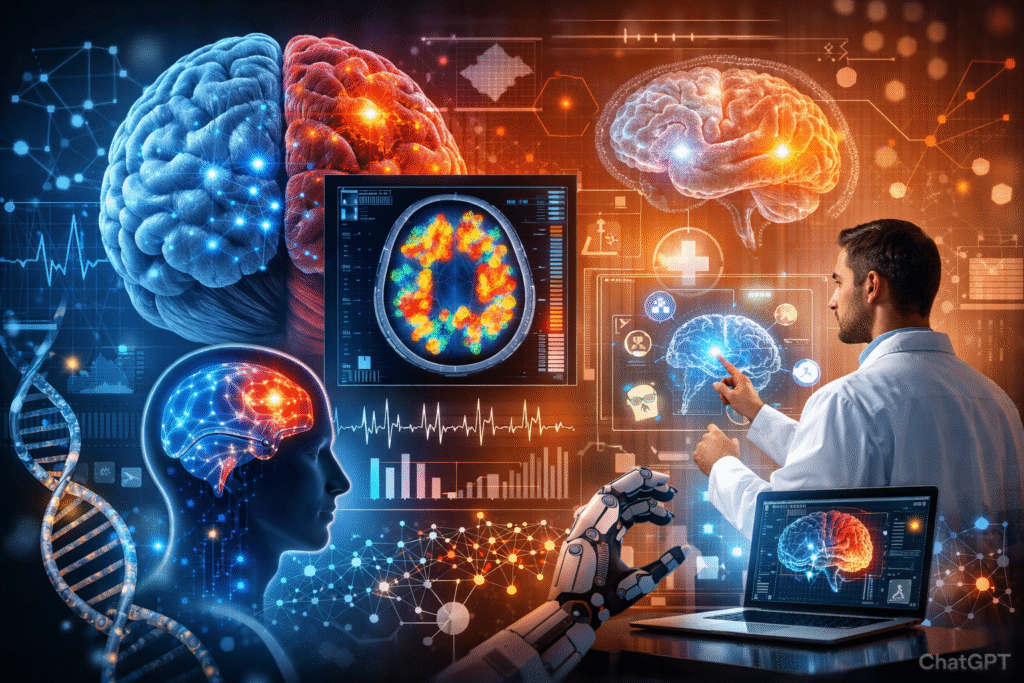
New Research in Neuroscience and Brain Function in Mental Disorders
New research in neuroscience is transforming how we understand mental disorders, revealing that the brain is far more adaptable—and vulnerable—than previously believed. Instead of seeing mental illness as a fixed condition, modern science is uncovering dynamic biological processes that shape thoughts, emotions, and behavior.
This article explores the latest discoveries in brain science, how they are redefining mental health, and what these findings mean for treatment, prevention, and the future of psychiatry.
Why Neuroscience Is Revolutionizing Mental Health Understanding
For decades, mental disorders were largely interpreted through behavioral and psychological lenses. While these perspectives remain important, neuroscience has introduced a biological dimension that brings clarity and precision.
Today, advanced tools like functional brain imaging, genetic sequencing, and computational modeling are helping researchers observe mental disorders at the neural level. This shift is moving psychiatry closer to fields like cardiology or oncology, where biological markers guide diagnosis and treatment.
- More accurate brain-based diagnoses
- Earlier detection of disorders
- Personalized treatment strategies
- Reduced stigma through scientific understanding
What Happens in the Brain During Mental Disorders?
Modern neuroscience shows that mental disorders rarely result from a single cause. Instead, they emerge from complex interactions between brain circuits, neurotransmitters, genetics, and environmental stressors.
Disrupted Neural Circuits
Research highlights that many psychiatric conditions involve dysfunctional communication between brain regions. For example, emotional regulation often depends on coordination between the prefrontal cortex and limbic system. When this balance breaks down, symptoms like anxiety, impulsivity, or mood instability may arise.
Neurotransmitter Imbalances
While simplified explanations often blame “chemical imbalances,” the reality is more nuanced. Neurotransmitters such as serotonin, dopamine, and glutamate influence brain signaling in complex networks rather than isolated pathways.
Recent studies suggest that mental disorders may involve altered signaling patterns rather than absolute deficiencies—explaining why some medications work differently across individuals.
Neuroinflammation and Brain Health
One of the most intriguing findings in recent neuroscience research is the link between inflammation and mental illness. Chronic low-grade inflammation may influence brain function by altering synaptic communication and neuroplasticity.
This emerging field is reshaping how researchers view conditions like depression and bipolar disorder, opening doors to anti-inflammatory treatment approaches.
Breakthrough Discoveries Changing Psychiatry
In the past decade, neuroscience has produced groundbreaking insights that are redefining how mental disorders are understood and treated.
Neuroplasticity: The Brain Can Rewire Itself
One of the most powerful discoveries is neuroplasticity—the brain’s ability to reorganize and form new connections. This finding challenges the outdated belief that mental disorders are permanent.
Therapies like cognitive behavioral therapy (CBT), mindfulness practices, and even lifestyle changes have been shown to physically reshape neural circuits.
The Gut-Brain Connection
New research highlights the role of the gut microbiome in mental health. The gut communicates with the brain through the vagus nerve, immune signaling, and metabolic pathways.
Imbalances in gut bacteria have been associated with anxiety, depression, and even neurodevelopmental disorders, suggesting that nutrition and microbiome health may play a larger role in psychiatric care.
Genetics and Epigenetics
Genetic research is revealing that mental disorders are rarely caused by a single gene. Instead, they involve complex gene networks influenced by environmental triggers.
Epigenetics—the study of how experiences alter gene expression—shows how trauma, stress, and lifestyle factors can modify brain function without changing DNA sequences.
How Brain Imaging Is Changing Diagnosis
Advanced neuroimaging technologies are allowing scientists to observe mental disorders in real time. Functional MRI (fMRI), PET scans, and EEG mapping provide unprecedented insights into brain activity patterns.
Toward Biomarker-Based Psychiatry
Researchers are working to identify biological markers that could help diagnose mental disorders objectively. While psychiatry still relies heavily on symptom-based evaluation, biomarkers may soon complement clinical assessments.
- Early detection of schizophrenia risk
- Identifying depression subtypes
- Predicting treatment response
- Monitoring therapy progress
This shift could dramatically improve accuracy and reduce misdiagnosis, a longstanding challenge in mental health care.
Innovative Treatments Emerging from Neuroscience
Scientific discoveries are not just theoretical—they are reshaping real-world treatment approaches. New interventions are moving beyond traditional medication models.
Personalized Psychiatry
Precision medicine is entering mental health. By analyzing genetic profiles, brain scans, and behavioral data, clinicians can tailor treatments to individual neurobiology.
This approach reduces trial-and-error prescribing and improves long-term outcomes.
Neuromodulation Technologies
Non-invasive brain stimulation techniques are gaining attention as alternatives or complements to medication.
- Transcranial magnetic stimulation (TMS)
- Deep brain stimulation (DBS)
- Transcranial direct current stimulation (tDCS)
These technologies directly target neural circuits involved in depression, OCD, and other conditions, offering hope for treatment-resistant patients.
Psychedelic-Assisted Therapy
In controlled clinical settings, psychedelic compounds are being revisited as therapeutic tools. Early studies suggest potential benefits for severe depression, PTSD, and end-of-life anxiety.
Researchers believe these substances may temporarily increase neural connectivity, enabling psychological breakthroughs during guided therapy.
Common Myths About Brain Function and Mental Disorders
Despite scientific progress, misinformation remains widespread. Addressing these myths is essential for building a realistic understanding of mental health.
Myth: Mental Illness Is Purely Psychological
Modern neuroscience clearly shows biological underpinnings in most mental disorders. Psychological and biological factors interact rather than compete.
Myth: Brain Damage Is Permanent
Neuroplasticity demonstrates that the brain can adapt and recover, especially with early intervention and consistent treatment.
Myth: Medication Is the Only Solution
While medication can be valuable, effective treatment often combines therapy, lifestyle adjustments, and social support.
Real-World Impacts of Neuroscience Advances
The implications of these discoveries extend beyond clinical settings. Neuroscience is reshaping how societies approach mental health.
Reducing Stigma
Understanding mental disorders as brain-based conditions helps shift public perception from blame to empathy. This cultural shift encourages more people to seek help earlier.
Workplace and Education Applications
Insights into brain function are influencing workplace wellness programs and educational strategies. Organizations are increasingly recognizing mental health as a productivity and quality-of-life factor.
Preventive Mental Health
With better understanding of risk factors, preventive strategies are gaining traction. Sleep quality, stress management, nutrition, and digital habits are now seen as essential brain health pillars.
Future Directions in Neuroscience and Mental Health
The next decade promises even deeper integration between neuroscience, technology, and mental health care.
AI and Brain Data Integration
Artificial intelligence is being used to analyze complex brain data sets, helping identify patterns invisible to human researchers. This could accelerate diagnosis and treatment discovery.
Digital Biomarkers
Smartphones and wearables may soon detect early signs of mental health changes through behavioral patterns like sleep, speech, and activity levels.
Holistic Brain Health Models
Future mental health care is likely to combine biology, psychology, lifestyle medicine, and digital monitoring into integrated treatment ecosystems.
FAQ: Neuroscience and Mental Disorders
Can brain scans diagnose mental illness?
Not yet as standalone tools. While brain imaging reveals patterns associated with disorders, diagnosis still relies on clinical evaluation. However, biomarker-based psychiatry is rapidly evolving.
Are mental disorders reversible?
Many conditions are manageable and, in some cases, significantly reversible due to neuroplasticity. Early treatment greatly improves outcomes.
Do genetics determine mental illness?
Genetics influence risk but do not determine destiny. Environmental factors, lifestyle, and coping strategies play major roles in mental health trajectories.
Is neuroscience replacing psychology?
No. The two fields are becoming more integrated. Effective mental health care combines biological insights with psychological therapies.
Will future treatments be personalized?
Yes. Personalized psychiatry is one of the most promising trends, aiming to tailor interventions based on individual brain and genetic profiles.
Conclusion: A New Era for Mental Health Science
Advances in neuroscience are fundamentally transforming how we understand mental disorders. By revealing the biological complexity behind thoughts and emotions, modern research is replacing outdated models with nuanced, evidence-based perspectives.
The practical implications are profound. From personalized treatments and innovative therapies to reduced stigma and earlier intervention, neuroscience is reshaping both clinical practice and public awareness.
As research continues to evolve, the future of mental health care will likely become more precise, humane, and effective. Understanding the brain is no longer just a scientific pursuit—it is a pathway to improving millions of lives worldwide.
COPYRIGHT NOTICE.

This video was embedded from YouTube and is licensed under Creative Commons (CC BY), which permits its reuse.

Credit to the original author as required by the license.