
ARTICLE IN ENGLISH –
CHECK OUT THE VIDEO –
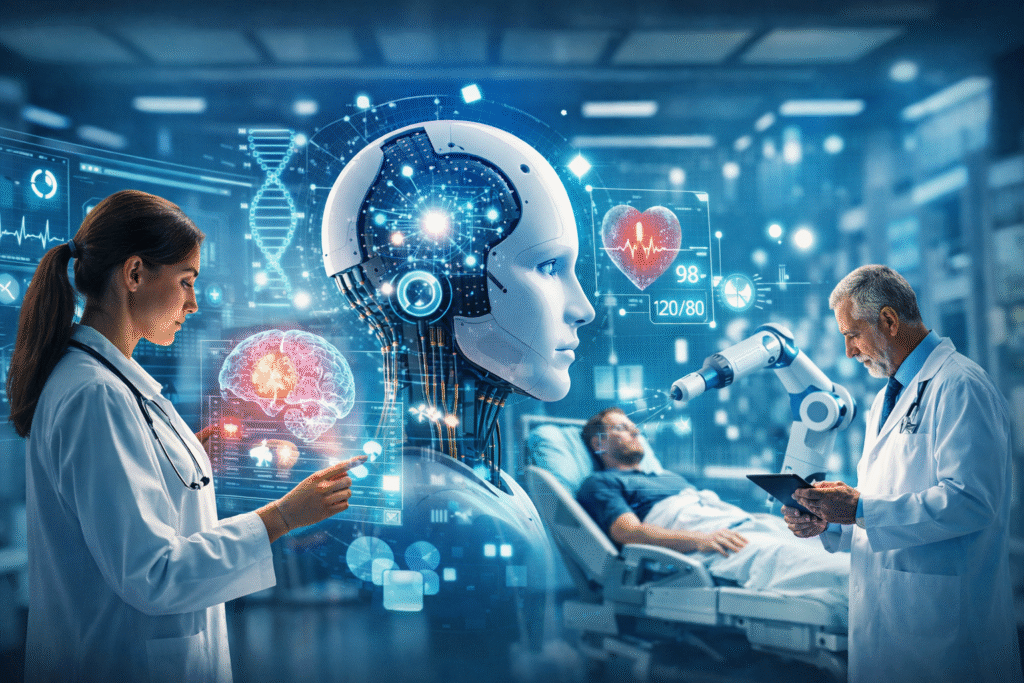
How Artificial Intelligence in Healthcare Is Revolutionizing Medicine and Saving Lives
Artificial Intelligence in healthcare is no longer a futuristic concept—it’s already transforming how diseases are diagnosed, treated, and even prevented. If you’ve ever wondered how technology can actually save lives, reduce medical errors, and improve patient outcomes, you’re about to discover the real impact behind the headlines.
The healthcare system faces serious challenges: delayed diagnoses, overwhelmed professionals, and rising costs. This article will show you exactly how AI is solving these problems, with practical examples, clear explanations, and real-world applications—even if you’re just starting to learn about AI.
What Is Artificial Intelligence in Healthcare? (Simple Definition)
Artificial Intelligence in healthcare refers to the use of algorithms and machine learning models to analyze medical data, support clinical decisions, and automate healthcare processes.
In simple terms: AI helps doctors and healthcare systems make faster, more accurate decisions using data.
- Analyzes medical images
- Predicts diseases before symptoms appear
- Supports treatment decisions
- Automates administrative tasks
👉 For a deeper understanding of AI fundamentals, explore this complete guide: Guia Definitivo para Inteligência Artificial
How Is AI Saving Lives Right Now?
This is where things get powerful. AI is not just improving efficiency—it’s directly impacting survival rates.
1. Early Disease Detection
AI can detect diseases like cancer earlier than traditional methods.
- Analyzes X-rays, MRIs, and CT scans
- Identifies patterns invisible to the human eye
- Reduces diagnostic errors
Example: AI systems can detect breast cancer in mammograms with accuracy comparable—or even superior—to experienced radiologists.
2. Predictive Analytics
AI can predict health risks before they become critical.
- Identifies patients at risk of heart attacks
- Predicts hospital readmissions
- Monitors chronic diseases in real time
This allows doctors to act early, preventing complications and saving lives.
3. Personalized Treatment
AI analyzes patient data to recommend customized treatments.
- Considers genetics, lifestyle, and medical history
- Improves treatment effectiveness
- Reduces side effects
Real impact: Cancer therapies are becoming more targeted and effective thanks to AI-driven insights.
Why Is AI More Accurate Than Traditional Methods?
AI doesn’t replace doctors—it enhances their capabilities.
Key advantages:
- Processes massive amounts of data in seconds
- Continuously learns from new cases
- Eliminates human fatigue and bias
While a human doctor may analyze hundreds of cases, AI can learn from millions.
How AI Is Transforming Hospitals and Clinics
The impact goes beyond diagnosis. AI is reshaping the entire healthcare system.
Automation of Administrative Tasks
- Scheduling appointments
- Managing patient records
- Reducing paperwork
This allows healthcare professionals to focus more on patient care.
Virtual Assistants and Chatbots
AI-powered assistants help patients:
- Get instant medical guidance
- Schedule consultations
- Monitor symptoms at home
These tools improve accessibility and reduce pressure on healthcare systems.
Remote Monitoring
Wearable devices connected to AI can track:
- Heart rate
- Blood pressure
- Glucose levels
This enables continuous care without hospital visits.
Step-by-Step: How AI Diagnoses a Disease
Here’s a simplified process that explains how AI works in real-world healthcare:
- 1. Data Collection: Medical images, patient records, and lab results are gathered
- 2. Data Processing: AI cleans and organizes the data
- 3. Pattern Recognition: Algorithms identify anomalies or risks
- 4. Prediction: AI suggests possible diagnoses
- 5. Decision Support: Doctors validate and act on the insights
Important: AI supports decisions—it does not replace human expertise.
What Are the Real Benefits of AI in Healthcare?
Let’s break it down into clear, practical advantages:
- Faster diagnoses
- Higher accuracy
- Reduced medical errors
- Lower healthcare costs
- Improved patient outcomes
- Better resource management
👉 Want to understand how these technologies work behind the scenes? Check out: Complete AI Guide for Beginners
Are There Any Risks or Limitations?
Yes—and understanding them is essential for a balanced view.
Main Challenges
- Data privacy concerns
- High implementation costs
- Need for high-quality data
- Ethical considerations
AI is powerful, but it must be used responsibly.
What Does the Future of AI in Healthcare Look Like?
The next decade will bring even more innovation.
- AI-powered robotic surgeries
- Real-time disease prediction
- Fully personalized medicine
- Global access to healthcare via AI platforms
Trend insight: Healthcare will shift from reactive to proactive—preventing diseases instead of just treating them.
How Can Beginners Start Learning About AI in Healthcare?
If you’re new to AI, start with the fundamentals before diving into healthcare applications.
- Learn basic AI concepts
- Understand machine learning
- Explore real-world case studies
- Follow industry trends
👉 Recommended starting point: Guia Completo de Inteligência Artificial
FAQ: Frequently Asked Questions
What is Artificial Intelligence in healthcare?
It is the use of algorithms and data to improve medical decisions, diagnoses, and treatments.
Can AI replace doctors?
No. AI supports doctors by providing insights, but human expertise remains essential.
Is AI in healthcare safe?
Yes, when properly regulated and used with high-quality data and ethical standards.
How does AI detect diseases?
By analyzing medical data and identifying patterns associated with specific conditions.
Is AI expensive for healthcare systems?
Initial costs can be high, but long-term savings and efficiency gains are significant.
Conclusion: Why This Revolution Matters More Than Ever
Artificial Intelligence in healthcare is not just a technological advancement—it’s a life-saving revolution. From early diagnosis to personalized treatment, AI is reshaping how medicine works and how patients experience care.
The most important takeaway? AI empowers healthcare professionals to make better decisions faster, ultimately saving more lives.
As technology continues to evolve, those who understand and embrace AI will be better prepared for the future of medicine. Whether you’re a curious beginner or an aspiring professional, now is the perfect time to explore this transformative field.
And if you want to build a solid foundation, don’t miss this essential resource: Guia Definitivo para Inteligência Artificial
SEO Title: AI in Healthcare: How It’s Saving Lives Today
Meta Description: Discover how artificial intelligence in healthcare is transforming medicine, improving diagnoses, and saving lives with real examples.
Slug: ai-healthcare-saving-lives
Main Keyword: Artificial Intelligence in healthcare
Secondary Keywords:
- AI in medicine
- healthcare technology
- machine learning healthcare
- AI diagnostics
- digital health innovation
- AI medical applications
- future of healthcare
Long-tail Keywords:
- how AI is used in healthcare today
- benefits of artificial intelligence in medicine
- examples of AI saving lives
- AI diagnosis accuracy compared to doctors
- future trends of AI in healthcare
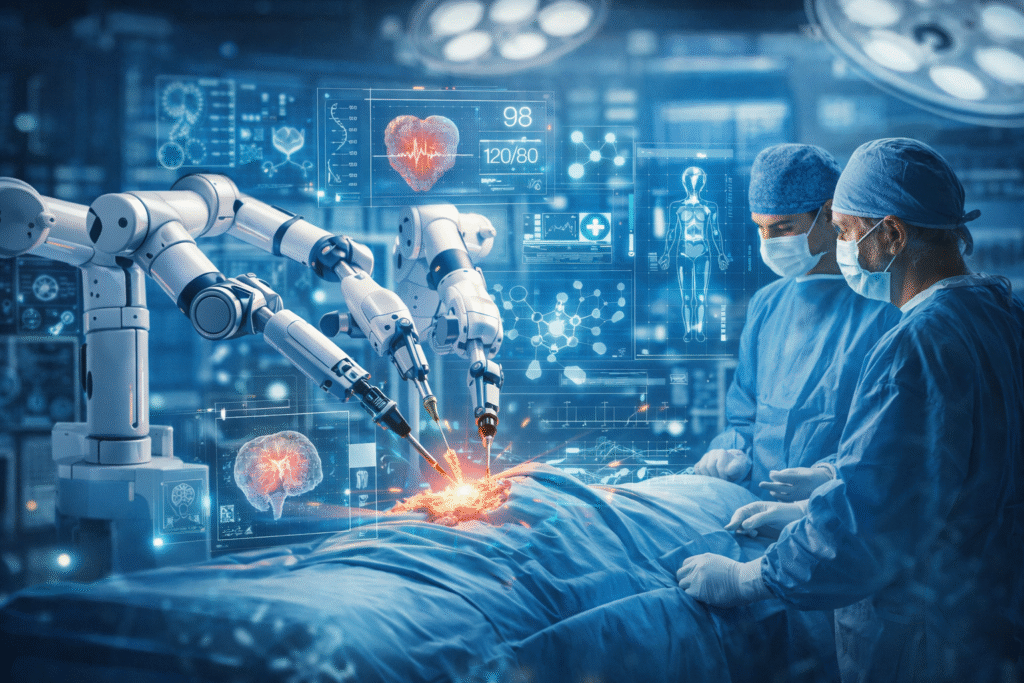
HOW ARTIFICIAL INTELLIGENCE IS REVOLUTIONIZING HEALTHCARE AND SAVING LIVES
AVISOS DE DIREITOS AUTORAIS.
Este vídeo foi incorporado do YouTube e está licenciado sob “Creative Commons” (CC BY), o que P E R M I T E sua reutilização.
Créditos ao autor original conforme exigido pela licença.