
ARTICLE IN ENGLISH –
CHECK OUT THE VIDEO –
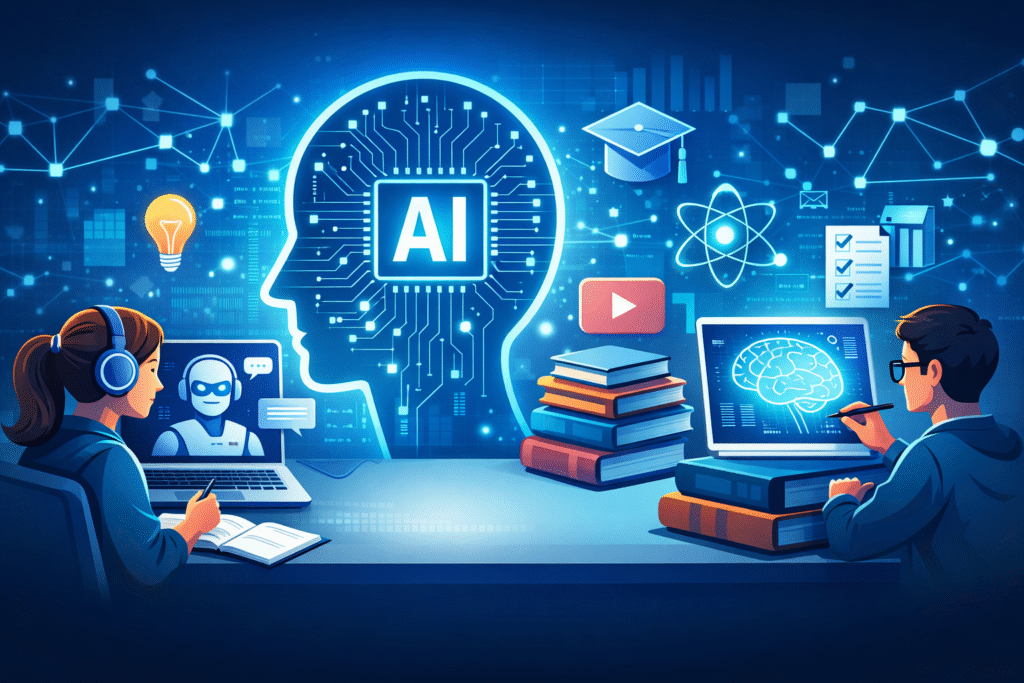
Artificial Intelligence for Beginners: How AI Is Transforming the Way We Learn
Artificial Intelligence for beginners is no longer just a trend—it’s becoming an essential skill. If you’ve ever felt overwhelmed by the speed of technological change or unsure where to start, you’re not alone. Many beginners struggle to understand how AI actually impacts learning and how to use it effectively.
The good news? AI is not here to replace learning—it’s here to enhance, personalize, and accelerate it. In this article, you’ll discover exactly how artificial intelligence is reshaping education, practical ways to use it today, and how you can take advantage of it—even as a complete beginner.
What Is Artificial Intelligence in Learning (Simple Definition)?
Artificial Intelligence (AI) in learning refers to the use of smart algorithms and systems that can analyze data, adapt to user behavior, and improve the learning experience automatically.
- AI observes how you learn
- AI adapts content to your level
- AI suggests what to study next
- AI automates repetitive tasks
In simple terms: AI turns learning into a personalized, data-driven experience.
Why Is AI Changing the Way We Learn So Fast?
The traditional education model is often rigid and one-size-fits-all. AI disrupts this by introducing flexibility, speed, and personalization.
1. Personalized Learning Paths
AI analyzes your progress and adjusts the content in real time. Instead of following a fixed curriculum, you get a custom learning journey.
Example: Language learning apps now adapt exercises based on your mistakes, helping you improve faster.
2. Instant Feedback
Waiting days for corrections is becoming outdated. AI tools provide immediate feedback, allowing you to fix errors instantly.
3. 24/7 Learning Assistance
AI-powered tutors are always available. Whether it’s midnight or early morning, you can ask questions and get answers instantly.
4. Data-Driven Insights
AI identifies patterns in your learning behavior, helping you understand:
- What you struggle with
- Where you improve faster
- What to focus on next
How Can Beginners Start Using AI to Learn?
If you’re new to AI, the key is to start simple and practical. You don’t need technical knowledge to benefit from it.
Step-by-Step Guide (Featured Snippet)
- Step 1: Choose one learning goal (e.g., English, coding, marketing)
- Step 2: Use AI tools to generate explanations and summaries
- Step 3: Practice with AI feedback
- Step 4: Track your progress weekly
- Step 5: Adjust your learning strategy based on results
This simple approach helps you learn faster without feeling overwhelmed.
What Are the Best Practical Uses of AI in Learning?
Smart Content Creation
AI can generate summaries, outlines, and even full explanations for complex topics.
- Turn long texts into short summaries
- Create study guides instantly
- Generate practice questions
Language Learning Acceleration
AI tools simulate conversations, correct grammar, and suggest better vocabulary in real time.
Skill Development
From coding to digital marketing, AI helps you learn by doing:
- Debug code
- Improve writing
- Analyze real-world scenarios
Study Optimization
AI helps you focus on what matters most, saving time and energy.
For a deeper understanding of how AI works in different industries, check this comprehensive guide: Ultimate Guide to Artificial Intelligence
Is AI Replacing Traditional Learning Methods?
No—and that’s a critical point.
AI is not replacing teachers or traditional education. Instead, it is:
- Enhancing human teaching
- Making learning more efficient
- Providing additional support
The future of education is a hybrid model: human expertise + AI intelligence.
What Are the Biggest Benefits of AI for Beginners?
Faster Learning Curve
You skip unnecessary steps and focus directly on what matters.
Reduced Frustration
AI explains concepts in different ways until you understand them.
Accessibility
Anyone with internet access can learn high-level skills.
Cost Efficiency
Many AI tools are free or low-cost compared to traditional education.
What Are the Limitations You Should Be Aware Of?
While powerful, AI is not perfect. Beginners should be aware of:
- Over-reliance: Don’t depend entirely on AI
- Accuracy issues: Always verify critical information
- Lack of human context: Some nuances require human judgment
Understanding these limitations helps you use AI more effectively and responsibly.
How to Use AI to Learn Faster (Actionable Tips)
Use AI as a Learning Assistant, Not a Shortcut
Instead of asking for ready answers, ask for explanations and step-by-step guidance.
Combine AI With Active Learning
- Take notes
- Practice regularly
- Teach what you learn
Create a Daily Learning Routine
Consistency matters more than intensity. Even 20–30 minutes daily can produce strong results.
Ask Better Questions
The quality of your results depends on your input. Be specific and clear.
How AI Is Shaping the Future of Education
AI is not just a tool—it’s a transformation.
In the near future, we can expect:
- Fully personalized education systems
- AI tutors integrated into daily learning
- Real-time skill assessment
- More practical, skill-based education models
This shift is already happening—and those who adapt early gain a significant advantage.
Internal Learning Path: Where to Go Next?
If you’re serious about mastering AI, your next step is to deepen your understanding of its foundations and applications.
We recommend reading this advanced resource: Complete AI Learning Guide for Beginners
This will help you move from basic understanding to practical implementation.
FAQ – Frequently Asked Questions
What is the best way to start learning AI?
The best way is to start with practical tools, focus on one skill, and learn by doing rather than only studying theory.
Do I need programming knowledge to use AI?
No. Many AI tools are designed for beginners and require no coding skills.
Can AI help me learn faster?
Yes. AI personalizes your learning path, provides instant feedback, and helps you focus on what matters most.
Is AI learning expensive?
Not necessarily. Many powerful tools are free or offer affordable plans.
What skills can I learn with AI?
You can learn languages, coding, writing, marketing, data analysis, and much more.
Conclusion: Why You Should Start Now
Artificial Intelligence is fundamentally changing how we learn—making it faster, smarter, and more accessible than ever before.
For beginners, this is a unique opportunity. You no longer need to rely solely on traditional methods or expensive courses. With the right approach, AI can become your personal learning assistant.
The key takeaway is simple: start small, stay consistent, and use AI as a tool—not a crutch.
The future of learning belongs to those who adapt. And the best time to start is now.
SEO Title
Artificial Intelligence for Beginners: How AI Is Changing Learning
Meta Description
Discover how AI is transforming learning. A beginner-friendly guide to using artificial intelligence effectively and learning faster.
Suggested URL (Slug)
/artificial-intelligence-for-beginners-learning
Main Keyword
Artificial Intelligence for Beginners
Secondary Keywords
- how to learn AI
- AI in education
- AI learning tools
- benefits of artificial intelligence
- AI for students
- learn faster with AI
- AI study methods
Long-Tail Keywords
- how to use artificial intelligence for learning
- best AI tools for beginners learning
- how AI is changing education systems
- ways to learn faster using AI tools
- beginner guide to artificial intelligence learning
How Artificial Intelligence is Changing the Way We Learn
AVISOS DE DIREITOS AUTORAIS.
Este vídeo foi incorporado do YouTube e está licenciado sob “Creative Commons” (CC BY), o que P E R M I T E sua reutilização.
Créditos ao autor original conforme exigido pela licença.