
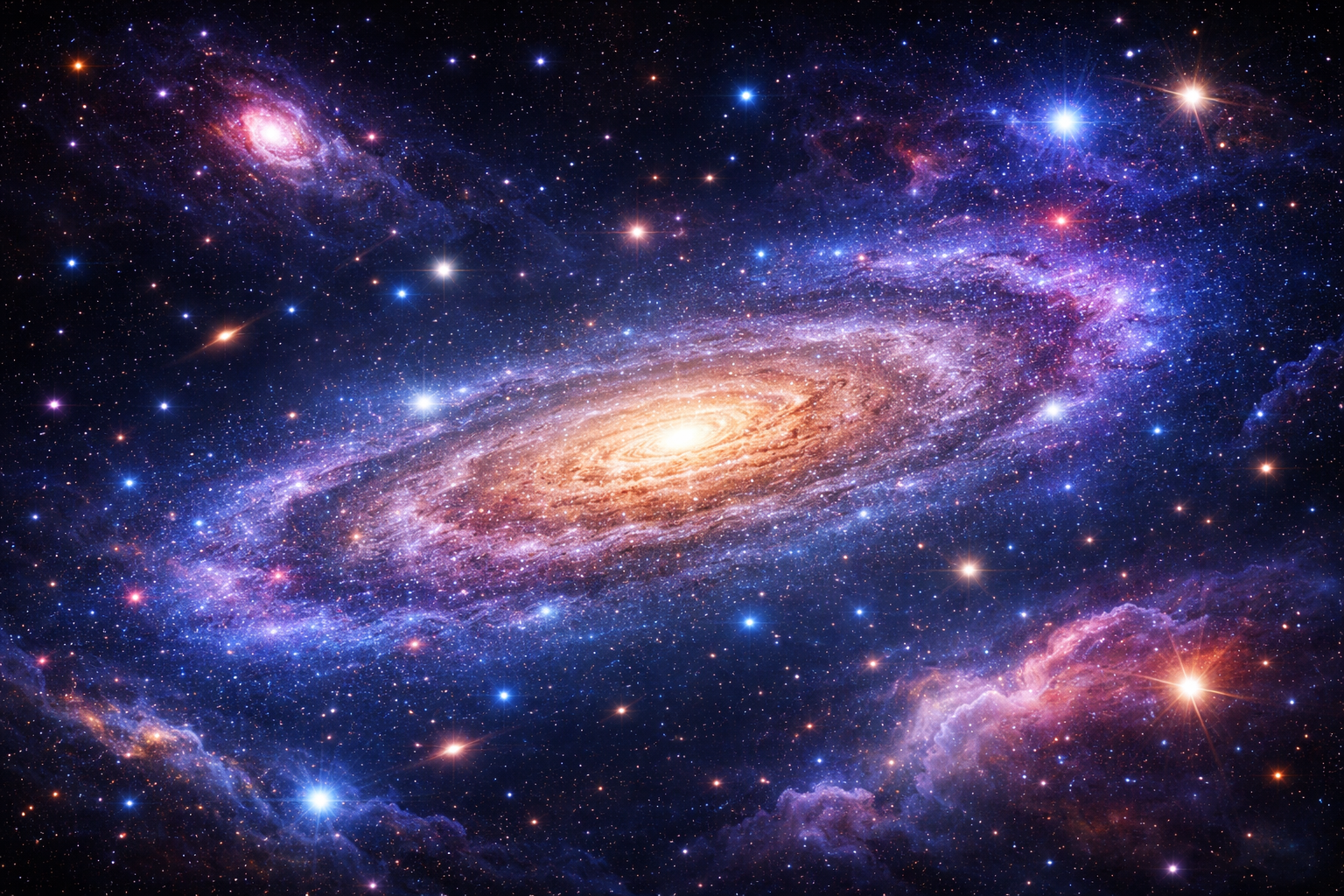
The vastness of the Universe invites humanity to contemplate the grandeur of creation and the profound mystery of existence itself. Stretching across unimaginable distances, the cosmos is filled with galaxies, stars, planets, and phenomena that challenge our understanding of reality. As scientific discoveries advance, the Universe reveals itself not only as a physical space, but also as a source of inspiration, reflection, and endless curiosity.
Exploring the immensity of the cosmos allows us to better understand where we come from, how everything began, and what our place might be within this immense cosmic structure. From the birth of stars to the expansion of space-time, the Universe continues to fascinate scientists, philosophers, and dreamers alike.
The Origin of the Universe and the Beginning of Everything
The story of the Universe begins with its origin, a subject that has intrigued humanity for centuries. Modern cosmology explains that the Universe emerged from an extremely hot and dense state, expanding over billions of years into the vast cosmic environment we observe today.
The Expansion of Space and Cosmic Evolution
As space expanded, matter began to organize itself into fundamental particles, atoms, stars, and eventually galaxies. This continuous expansion shapes the large-scale structure of the Universe and influences how galaxies move and evolve.
The observation of distant celestial objects allows scientists to look back in time, offering valuable insights into the early stages of cosmic evolution and the formation of the first stars.
Galaxies, Stars, and the Architecture of the Cosmos
The Universe contains billions of galaxies, each hosting billions of stars and planetary systems. These massive structures form the backbone of the cosmos, interconnected by gravitational forces and cosmic filaments.
Types of Galaxies and Their Characteristics
Galaxies vary in shape and size, including spiral, elliptical, and irregular formations. Each type provides clues about the processes that shaped it over cosmic time, such as star formation, collisions, and gravitational interactions.
The Life Cycle of Stars
Stars are born within vast clouds of gas and dust, shining for millions or billions of years before reaching the end of their life cycle. Their evolution contributes to the creation of heavier elements, which are essential for planets and life as we know it.
Planets, Exoplanets, and the Search for Life
The discovery of planets beyond our solar system has transformed our understanding of the Universe. Thousands of exoplanets have been identified, revealing a wide diversity of worlds with different compositions and environments.
Habitability and Cosmic Possibilities
Some exoplanets reside in regions where conditions may allow liquid water to exist, increasing the potential for life. Studying these distant worlds helps scientists explore one of humanity’s most profound questions: are we alone in the Universe?
Mysteries of the Universe: Dark Matter and Dark Energy
Despite remarkable progress, much of the Universe remains unknown. Dark matter and dark energy dominate the cosmic landscape, yet they cannot be directly observed.
Invisible Forces Shaping the Cosmos
Dark matter influences the motion of galaxies, while dark energy drives the accelerated expansion of the Universe. Together, they play a critical role in the structure and destiny of the cosmos, highlighting how much there is still to discover.
Technology and Innovation in Cosmic Exploration
Advancements in technology have revolutionized our ability to explore the Universe. Powerful telescopes, space observatories, and advanced computing tools enable scientists to study distant objects with unprecedented precision.
Modern Instruments and Scientific Progress
Innovative technologies allow researchers to detect gravitational waves, analyze cosmic radiation, and map the distribution of galaxies across vast distances. These breakthroughs expand our understanding of cosmic history and future possibilities.
The Human Perspective and the Impact of Cosmic Knowledge
Understanding the vastness of the Universe profoundly affects how humanity views itself. Recognizing the immense scale of the cosmos encourages humility, curiosity, and a deeper appreciation for life on Earth.
Science, Philosophy, and Inspiration
The study of the Universe connects science with philosophy, inspiring questions about existence, time, and purpose. This cosmic perspective fosters innovation, education, and a shared sense of wonder across cultures.
Frequently Asked Questions About the Universe
How large is the Universe?
The exact size of the Universe is unknown, but observations suggest it extends far beyond what we can currently detect.
How many galaxies exist in the Universe?
Scientists estimate that there are hundreds of billions of galaxies, each containing billions of stars.
Is the Universe still expanding?
Yes, current evidence shows that the Universe is expanding at an accelerating rate.
Why is studying the Universe important?
Exploring the cosmos helps humanity understand fundamental laws of nature, technological innovation, and our place in existence.
Conclusion: The Eternal Fascination of the Cosmic Vastness
The vastness of the Universe remains one of the greatest sources of wonder and discovery. As humanity continues to explore the cosmos, each new revelation deepens our understanding of creation, existence, and the infinite possibilities that lie beyond our planet.
By studying the Universe, we not only expand scientific knowledge but also nurture curiosity and inspiration, ensuring that the fascination with cosmic immensity endures for generations to come.
AVISOS DE DIREITOS AUTORAIS.
Este vídeo foi incorporado do YouTube e está licenciado sob CREATIVE COMMONS (CC BY), o que permite sua reutilização.
Créditos ao autor original conforme exigido pela licença.