
ARTICLE IN ENGLISH –
CHECK OUT THE VIDEO –
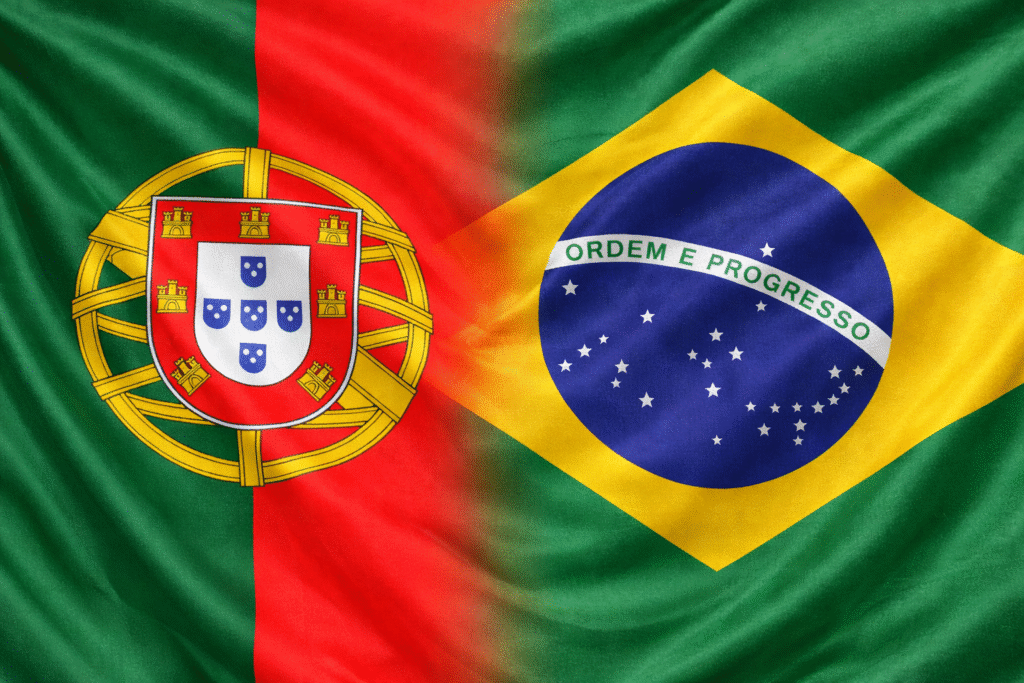
Fascinating Curiosities About the Portuguese Language
Curiosities about the Portuguese language often reveal a linguistic richness that goes far beyond grammar rules and everyday communication. Spoken by hundreds of millions of people across multiple continents, Portuguese carries a deep historical legacy, unique structural features, and surprising cultural influences that many speakers themselves are unaware of.
Understanding these lesser-known aspects helps explain why Portuguese remains one of the most expressive, adaptable, and globally relevant languages today. This article explores remarkable facts, historical details, and linguistic curiosities that highlight the true complexity and global importance of the Portuguese language.
Why Is the Portuguese Language Considered One of the World’s Richest?
The Portuguese language stands out for its lexical diversity, phonetic flexibility, and historical depth. Its evolution reflects centuries of cultural exchange, migration, and adaptation across Europe, Africa, Asia, and the Americas.
Unlike many languages that developed within limited geographic boundaries, Portuguese expanded early through maritime exploration, absorbing influences while maintaining a strong structural identity.
How Many Words Does the Portuguese Language Really Have?
Estimates suggest that Portuguese contains more than 250,000 words, with new terms continuously added through technology, science, and cultural interaction.
This extensive vocabulary allows speakers to express subtle emotional, social, and conceptual nuances with remarkable precision.
- Multiple synonyms for emotions and sensations
- Formal and informal variations for social contexts
- Regional vocabulary shaped by local cultures
Why Do Portuguese Speakers Express Emotions So Intensely?
Portuguese is known for its emotional depth. Many linguistic researchers attribute this to the strong presence of abstract nouns, expressive verb forms, and diminutives that convey affection, irony, or intimacy.
Words often carry emotional layers that go beyond literal meaning, making the language particularly rich in literature, music, and everyday conversation.
Historical Curiosities That Shaped the Portuguese Language
The history of Portuguese is marked by constant transformation. Originating from Vulgar Latin, it evolved through contact with diverse civilizations and languages.
What Languages Influenced Portuguese the Most?
While Latin forms the foundation, Portuguese absorbed significant influences from other languages throughout history.
- Arabic: introduced hundreds of words related to science, agriculture, and daily life
- Celtic languages: contributed phonetic patterns and place names
- Indigenous and African languages: enriched vocabulary in Brazil and Africa
This linguistic blending explains why Portuguese sounds and functions differently from other Romance languages.
Why Does Portuguese Have So Many Regional Variations?
Portuguese is spoken officially in more than nine countries, each with its own historical and cultural context. These variations affect pronunciation, vocabulary, and even sentence structure.
Despite these differences, mutual intelligibility remains high, demonstrating the language’s remarkable internal coherence.
Surprising Linguistic Features of Portuguese
Beyond its history and vocabulary, Portuguese has grammatical and phonetic characteristics that surprise both learners and native speakers.
Is Portuguese One of the Most Phonetically Complex Languages?
Portuguese contains nasal vowels, diphthongs, and subtle sound distinctions that are uncommon in many other languages.
These features contribute to its melodic quality but also make pronunciation challenging for non-native learners.
Examples of Unique Phonetic Traits
- Nasal sounds not commonly found in English or Spanish
- Variable stress patterns that change word meaning
- Regional accents with distinct rhythmic structures
Why Are Verb Conjugations So Detailed?
Portuguese verb conjugation allows speakers to express time, mood, certainty, and intention with great precision.
The extensive use of subjunctive forms, for example, enables nuanced communication about hypothetical, emotional, or uncertain situations.
The Global Importance of the Portuguese Language Today
Portuguese is far more than a regional language. It plays a growing role in international business, diplomacy, education, and digital communication.
How Relevant Is Portuguese in the Global Economy?
Countries where Portuguese is spoken represent significant economic potential, particularly in emerging markets.
- Expanding trade networks in South America and Africa
- Strategic importance in energy and natural resources
- Growing demand for Portuguese-speaking professionals
This global relevance increases interest in learning Portuguese as a second or foreign language.
Why Is Portuguese Gaining Popularity Among Language Learners?
Learners are increasingly attracted to Portuguese for its cultural richness, professional opportunities, and global reach.
Its presence in music, cinema, literature, and online platforms continues to grow, reinforcing its international appeal.
Practical Benefits of Understanding These Linguistic Curiosities
Knowing these lesser-known facts about Portuguese enhances both learning and teaching experiences.
It helps learners appreciate the language beyond memorization and allows educators to contextualize grammar and vocabulary more effectively.
How Does Linguistic Awareness Improve Communication?
When speakers understand the historical and emotional layers of Portuguese, communication becomes more accurate and culturally sensitive.
This awareness is especially valuable in professional, academic, and multicultural environments.
Frequently Asked Questions About the Portuguese Language
Is Portuguese harder to learn than other Romance languages?
Portuguese can be challenging due to pronunciation and verb forms, but its logical structure makes progress consistent with practice.
How many countries officially speak Portuguese?
Portuguese is an official language in more than nine countries across four continents.
Why does Portuguese sound different in Brazil and Portugal?
Historical separation and cultural influences shaped distinct pronunciation patterns and vocabulary.
Is Portuguese closer to Spanish or French?
Structurally, Portuguese is closer to Spanish, but phonetically it shares traits with French.
Can Portuguese speakers understand each other worldwide?
Yes. Despite variations, mutual comprehension remains high among Portuguese speakers globally.
Conclusion: Why Portuguese Is More Fascinating Than It Seems
The Portuguese language is a living reflection of history, culture, and human expression. Its richness lies not only in its vocabulary or grammar but in its ability to adapt, absorb, and convey complex emotions and ideas.
By exploring these fascinating curiosities, we gain a deeper appreciation of Portuguese as a global language with enduring relevance and cultural power. Understanding its hidden layers opens new perspectives for learners, educators, and professionals alike.
COPYRIGHT NOTICE.

This video was embedded from YouTube and is licensed under Creative Commons (CC BY), which permits its reuse.

Credit to the original author as required by the license.