
ARTICLE IN ENGLISH –
CHECK OUT THE VIDEO –
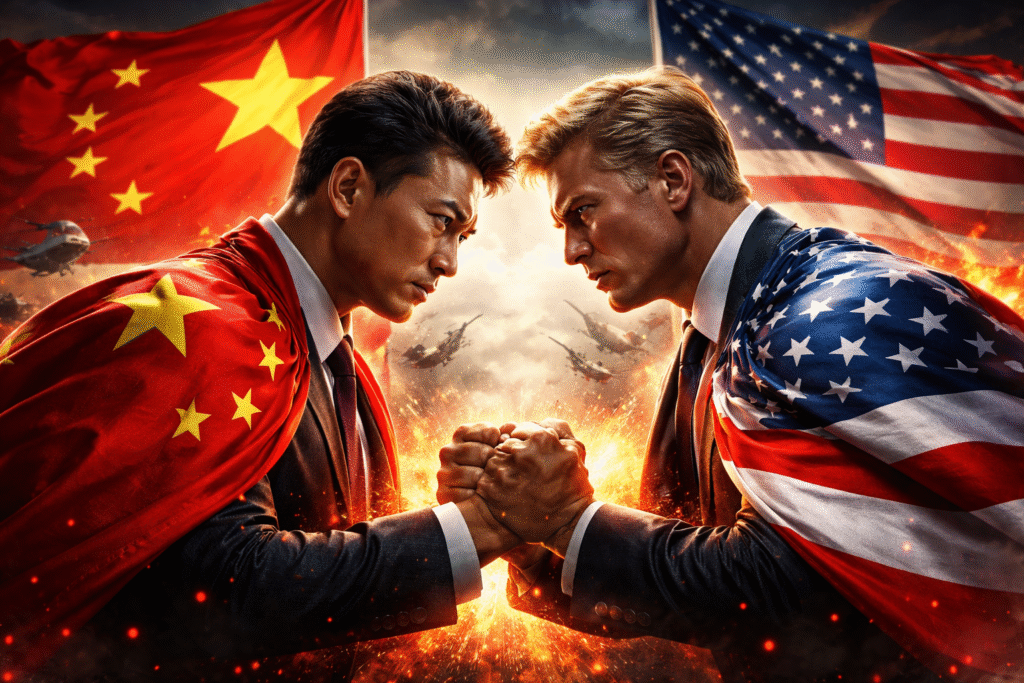
Global impacts of the rivalry between the United States and China
The global impacts of the rivalry between the United States and China are reshaping international politics, economic systems, technological innovation, and global security. What was once a bilateral competition has evolved into a structural confrontation that influences markets, governments, and societies worldwide. This rivalry defines the strategic landscape of the 21st century and affects virtually every nation, directly or indirectly.
Understanding this geopolitical dynamic is essential for policymakers, businesses, investors, and citizens seeking to navigate an increasingly fragmented global order. Beyond headlines and political rhetoric, the US–China rivalry produces tangible consequences that shape global trade, supply chains, diplomacy, and technological standards.
Why has the rivalry between the United States and China intensified?
Is this rivalry rooted in economics, politics, or ideology?
The rivalry stems from a combination of economic competition, political influence, and contrasting governance models. The United States seeks to preserve its global leadership, while China aims to expand its influence as a rising superpower. This strategic tension has intensified as China’s economic growth and technological capacity challenge established Western dominance.
At its core, the conflict reflects a struggle over rules, norms, and power distribution within the international system. Unlike past rivalries, this one is deeply embedded in global economic interdependence, making its consequences more complex and far-reaching.
How does power transition theory explain this conflict?
Power transition theory suggests that rivalry intensifies when a rising power approaches parity with a dominant one. China’s rapid economic expansion, military modernization, and diplomatic assertiveness have placed it closer to the United States than any competitor in recent decades.
This perceived shift fuels strategic mistrust, prompting both nations to adopt defensive and sometimes confrontational policies that ripple across global institutions and alliances.
How does the US–China rivalry affect the global economy?
What are the consequences for international trade?
Trade tensions are among the most visible global impacts of the rivalry between the United States and China. Tariffs, export controls, and regulatory barriers have disrupted global trade flows, increasing costs for companies and consumers worldwide.
Many countries face pressure to adapt their trade strategies, diversify markets, and reassess dependencies. The uncertainty generated by these disputes weakens global economic growth and undermines long-established trade norms.
- Higher production and consumer costs
- Increased market volatility
- Reduced predictability for global businesses
How are global supply chains being restructured?
The rivalry has accelerated the restructuring of global supply chains. Companies are relocating production, diversifying sourcing, and adopting “China plus one” strategies to mitigate geopolitical risk.
While this shift creates opportunities for emerging economies, it also increases operational complexity and costs, affecting efficiency and long-term investment decisions.
What are the technological implications of this rivalry?
Is technology the new frontline of global competition?
Technology has become a central battleground in the US–China rivalry. Competition over semiconductors, artificial intelligence, telecommunications, and data governance reflects broader concerns about economic security and strategic dominance.
Export restrictions and investment screening measures have fragmented innovation ecosystems, leading to parallel technological spheres with limited interoperability.
How does this impact global innovation and standards?
The division of technological ecosystems threatens to slow global innovation and increase costs for businesses and consumers. Competing standards in areas such as 5G, cybersecurity, and digital infrastructure may reduce efficiency and limit global collaboration.
Countries caught between the two powers must carefully balance access, security, and long-term competitiveness.
How does the rivalry influence global geopolitics?
Are countries being forced to choose sides?
Many nations face growing pressure to align with either the United States or China. This strategic polarization complicates foreign policy decisions, particularly for middle powers seeking neutrality or balanced engagement.
The rivalry reshapes alliances, strengthens regional blocs, and weakens multilateral consensus on global challenges.
What happens to international institutions?
Global institutions increasingly reflect the tension between competing visions of governance. Disagreements within international organizations hinder effective responses to issues such as climate change, global health, and financial stability.
This erosion of cooperation raises concerns about long-term global governance and collective problem-solving.
What are the security and military consequences worldwide?
Does the rivalry increase the risk of global conflict?
Military competition, particularly in the Indo-Pacific region, heightens the risk of miscalculation and escalation. Increased defense spending, military exercises, and strategic posturing contribute to global insecurity.
Although direct conflict remains unlikely, the cumulative effect of tensions increases uncertainty and undermines international stability.
How are defense strategies evolving globally?
Many countries are reassessing defense policies, investing in military modernization, and strengthening regional partnerships. This shift reflects a broader trend toward strategic autonomy and preparedness.
However, increased militarization diverts resources from social and economic development, creating long-term challenges.
What are the impacts on emerging and developing economies?
Do developing countries benefit or suffer?
The global impacts of the rivalry between the United States and China are mixed for developing economies. Some benefit from investment diversification and supply chain relocation, while others face heightened vulnerability to external shocks.
Economic dependence on either power can expose countries to political pressure and economic instability.
- New investment opportunities
- Greater geopolitical risk
- Pressure on domestic policy autonomy
Future scenarios: where is this rivalry heading?
Is cooperation still possible?
Despite deep tensions, limited cooperation remains possible in areas of shared interest, such as climate policy and global health. Pragmatic engagement may prevent the rivalry from escalating into systemic fragmentation.
The trajectory will depend on leadership choices, domestic pressures, and global economic conditions.
What does this mean for the global order?
The rivalry is accelerating the transition toward a more multipolar and fragmented world. Global rules, institutions, and norms are likely to evolve as power becomes more diffused.
Adaptability, strategic foresight, and diplomatic skill will be essential for navigating this new era.
Frequently Asked Questions (FAQ)
What are the main global impacts of the rivalry between the United States and China?
The rivalry affects global trade, technology, geopolitics, security, and economic stability, influencing countries worldwide.
Is the US–China rivalry mainly economic?
While economics play a central role, the rivalry also involves political influence, technological leadership, and strategic security concerns.
How does this rivalry affect global markets?
It increases volatility, disrupts supply chains, and creates uncertainty for investors and businesses.
Are other countries forced to choose sides?
Many countries face pressure to align strategically, though some seek balanced or non-aligned approaches.
Can this rivalry be managed peacefully?
Yes, through diplomacy, cooperation in shared areas, and effective crisis management mechanisms.
Conclusion: why this rivalry matters to the world
The global impacts of the rivalry between the United States and China extend far beyond bilateral relations. This competition shapes economic systems, technological progress, geopolitical alliances, and global security dynamics.
Understanding its implications is crucial for governments, businesses, and individuals alike. As this rivalry continues to evolve, its outcomes will define the contours of the global order for decades to come, demanding informed analysis, strategic adaptation, and sustained international dialogue.
COPYRIGHT NOTICE.

This video was embedded from YouTube and is licensed under Creative Commons (CC BY), which permits its reuse.

Credit to the original author as required by the license.