
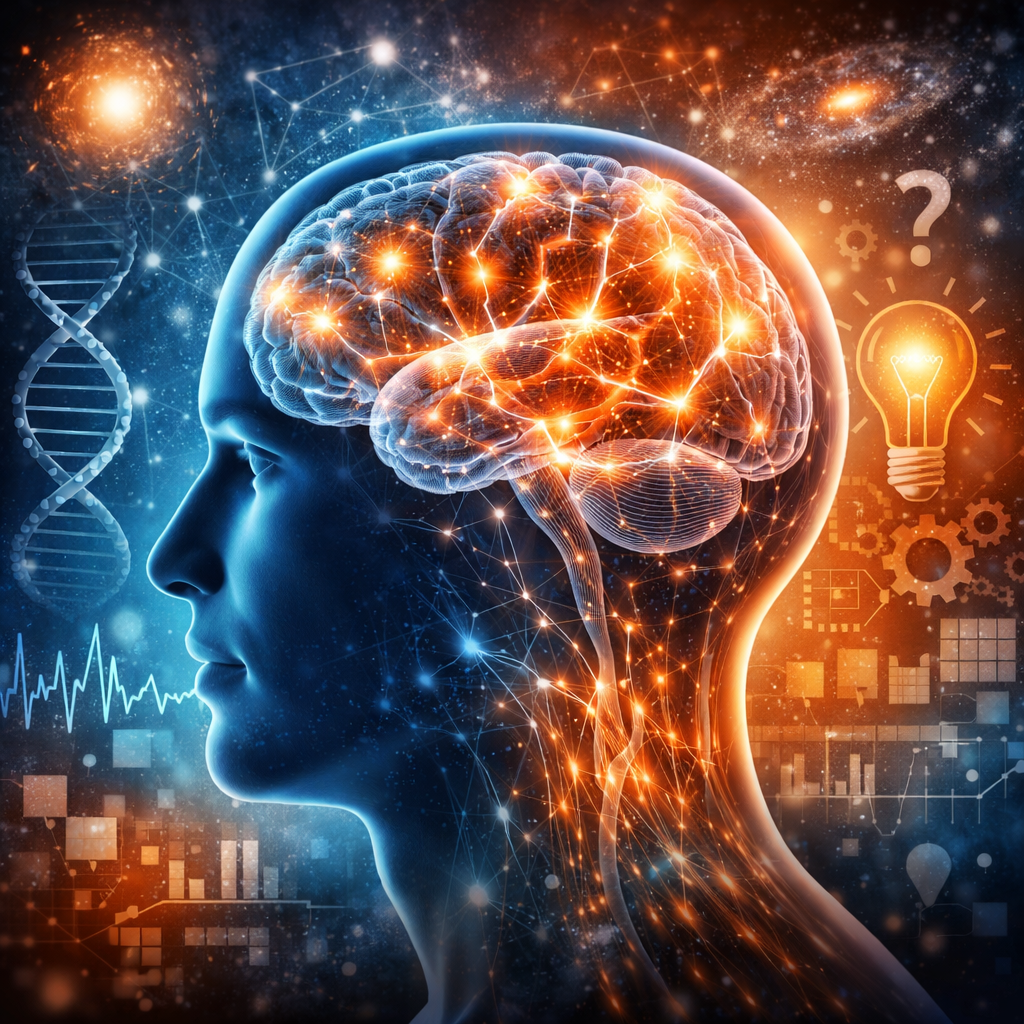
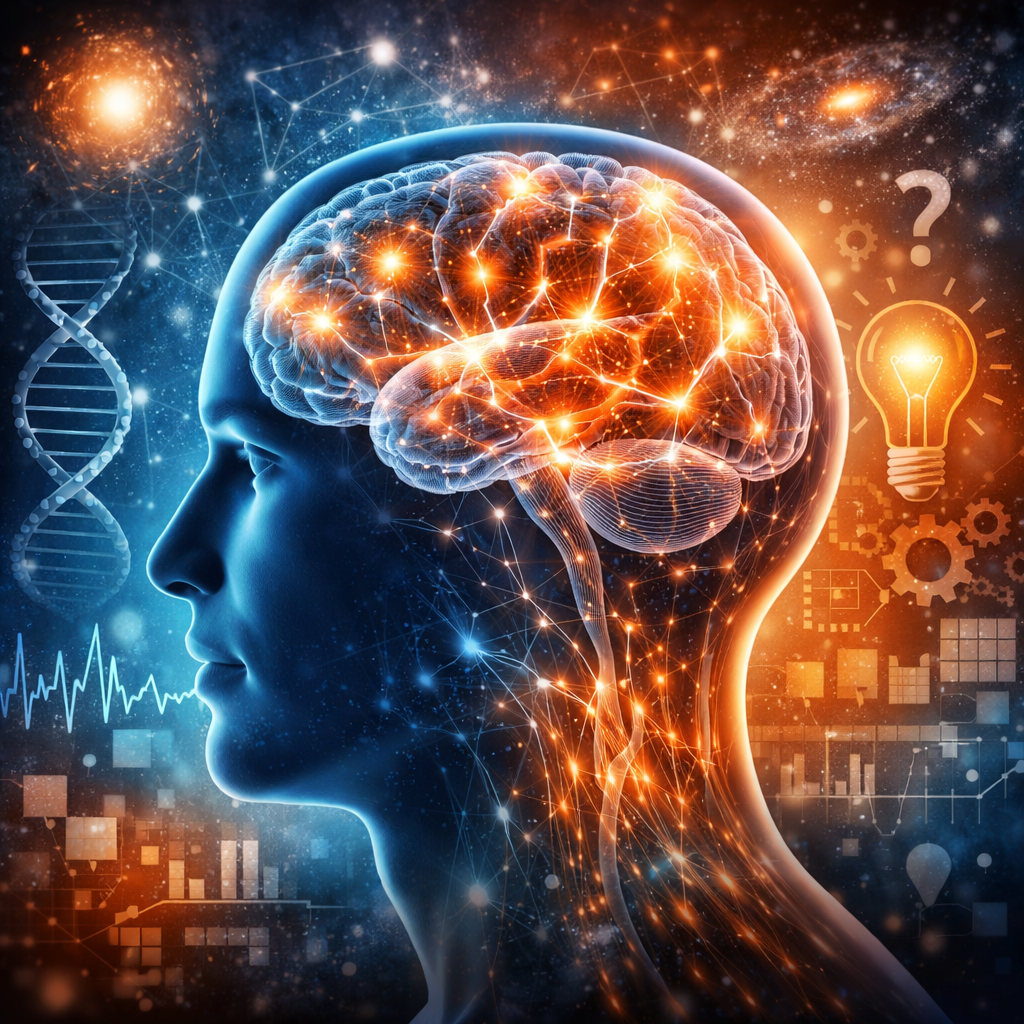
The human mind is one of the most complex and fascinating creations in nature. Despite centuries of study and rapid advances in neuroscience, psychology, and artificial intelligence, much of how our minds truly work remains a mystery. Every second, the brain processes massive amounts of information, shapes emotions, and influences decisions—often without our conscious awareness.
In this article, you will explore curious facts about the human mind that are surprising, intriguing, and sometimes even mind-blowing. These insights reveal how powerful, adaptable, and mysterious our mental processes really are, offering a deeper understanding of human behavior and cognition.
1. The human brain works faster than any computer you use
One of the most fascinating facts about the human mind is its incredible speed. The brain can process visual information in as little as 13 milliseconds. This means that before you consciously register what you are seeing, your brain has already analyzed it.
This ability evolved as a survival mechanism, allowing humans to react instantly to danger. Today, it still plays a crucial role in activities such as driving, sports, and recognizing faces in a crowd.
2. You are not fully aware of most of your thoughts
Research suggests that the average person experiences between 60,000 and 80,000 thoughts per day. Surprisingly, the majority of these thoughts are automatic and repetitive. The human mind constantly generates ideas, worries, and mental images without asking for permission.
This explains why negative thoughts can appear suddenly and persist. Learning to observe thoughts rather than react to them is a key concept in modern psychology and mindfulness practices.
3. The brain struggles to tell imagination from reality
When you vividly imagine an experience, your brain activates many of the same neural pathways used during real events. This is why your heart can race during a scary movie or why recalling an embarrassing moment can trigger physical discomfort.
This curious aspect of the human mind is also why visualization techniques are used by athletes, performers, and therapists to improve performance and emotional well-being.
4. Emotions guide decisions more than logic
Although people often believe they make rational decisions, neuroscience reveals that emotions play a dominant role. The emotional centers of the brain react before the logical areas have time to analyze the situation.
This affects everything from purchasing decisions to personal relationships. Understanding how emotions influence choices can help individuals make more balanced and intentional decisions.
5. The human mind loves patterns—even false ones
The brain is designed to recognize patterns as a way to save energy and make sense of the world. However, this tendency can cause us to see connections where none exist, a phenomenon known as pareidolia.
This explains why people see faces in clouds, believe in lucky numbers, or find meaning in coincidences. The mind prefers an explanation—even an incorrect one—over uncertainty.
6. Multitasking is mostly a myth
Despite popular belief, the human brain cannot truly focus on multiple complex tasks at the same time. Instead, it rapidly switches attention between tasks, which reduces efficiency and increases mistakes.
In a world filled with notifications and constant distractions, focusing on one task at a time leads to better productivity and improved mental clarity.
7. Your memories are not as reliable as you think
Memory is not a perfect recording of past events. Each time you recall a memory, your brain reconstructs it, sometimes altering details without you realizing it.
This is why different people remember the same event differently. Emotions, beliefs, and expectations all influence how memories are remember and reshaped over time.
8. The brain consumes enormous amounts of energy
Although the brain represents only about 2% of body weight, it consumes roughly 20% of the body’s total energy. Thinking, learning, and decision-making require significant fuel.
This highlights the importance of proper nutrition, quality sleep, and mental breaks to maintain optimal cognitive performance.
9. Silence and boredom stimulate creativity
When the mind is not overloaded with information, it enters a state known as the default mode network. During this time, creativity, problem-solving, and self-reflection increase.
This explains why great ideas often emerge in the shower, during a walk, or in moments of quiet reflection.
Frequently Asked Questions (FAQ)
Can the human mind be trained?
Yes. Habits such as reading, meditation, physical exercise, and continuous learning strengthen neural connections and improve mental flexibility.
Why do negative thoughts repeat so often?
The brain has a natural negativity bias designed to detect threats. While useful for survival, it can be managed through awareness and cognitive training.
Can you influence your own brain?
Absolutely. Techniques like positive affirmations, visualization, and habit formation can reshape thought patterns over time.
How does stress affect the human mind?
Chronic stress impairs memory, focus, emotional regulation, and decision-making. Managing stress is essential for long-term mental health.
Conclusion
The human mind is a powerful, adaptable, and endlessly fascinating system. By understanding how it works, we gain insight into our emotions, behaviors, and limitations. These curious facts about the human mind reveal that much of what we experience is shaped by unconscious processes.
Learning about the mind is not only intellectually stimulating but also deeply empowering. The more we understand our mental processes, the better equipped we are to live with awareness, balance, and purpose in an increasingly complex world.
AVISOS DE DIREITOS AUTORAIS.
Este vídeo foi incorporado do YouTube e está licenciado sob “CREATIVE COMMONS” (CC BY), o que permite sua reutilização.
Créditos ao autor original conforme exigido pela licença.
COPYRIGHT NOTICE.

This video was embedded from YouTube and is licensed under Creative Commons (CC BY), which permits its reuse.

Credit to the original author as required by the license.