
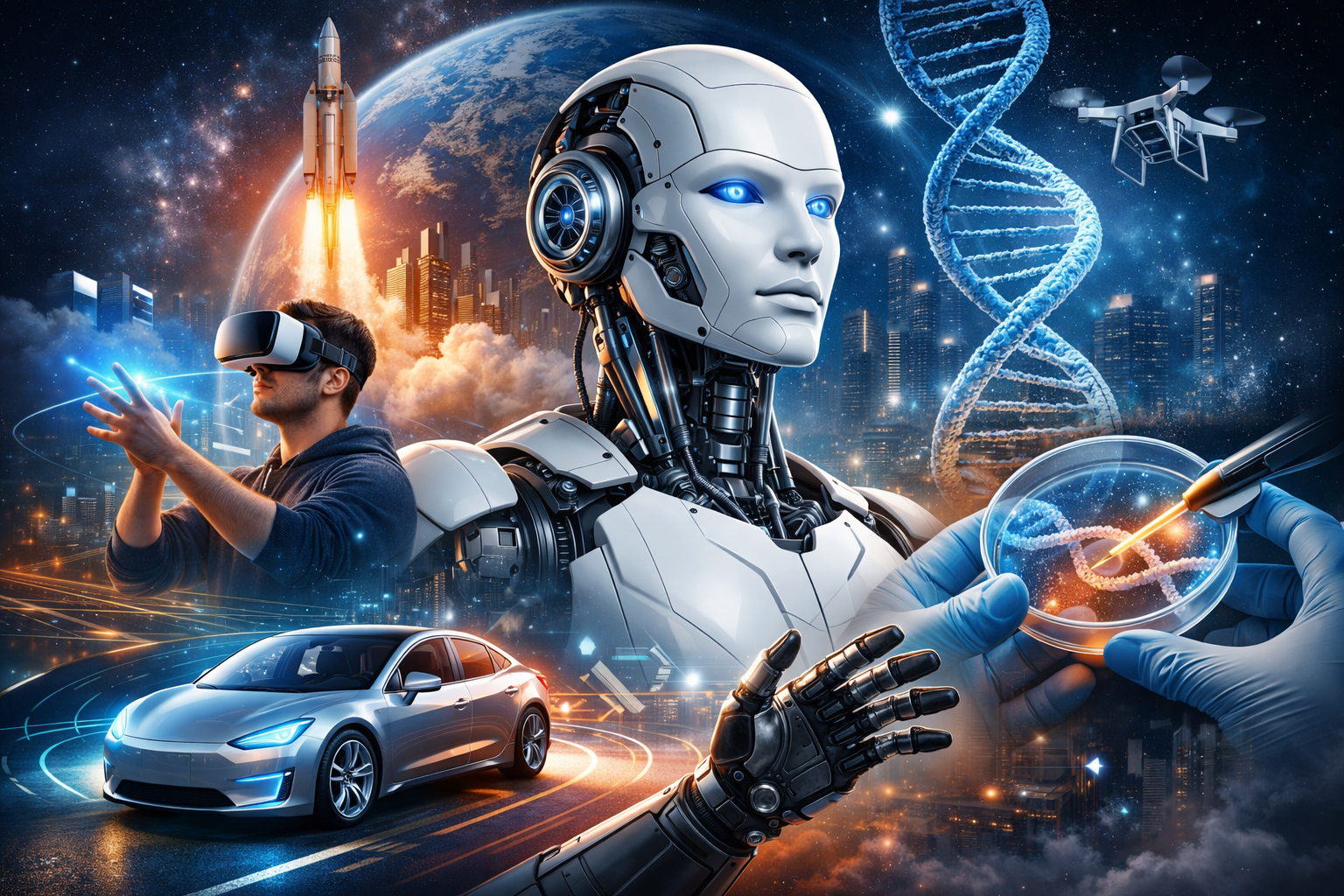
Technologies That Once Seemed Like Science Fiction and Are Now Reality
For decades, science fiction has fueled human imagination with bold ideas about the future. Concepts such as intelligent machines, immersive virtual worlds, genetic manipulation, and autonomous vehicles once felt distant and unattainable. Today, many of these futuristic visions are no longer fiction — they are part of our everyday reality.
Technological innovation is accelerating at an extraordinary pace. Advances in artificial intelligence, digital connectivity, biotechnology, and space exploration have transformed once-impossible ideas into practical tools that influence how we live, work, and interact. This article explores the most fascinating technologies that once seemed like science fiction and are now shaping the modern world.
Artificial Intelligence: Machines That Learn and Decide
Artificial Intelligence was once portrayed as a distant future dominated by conscious machines. While true human-like awareness remains theoretical, modern AI systems already demonstrate remarkable capabilities that rival and surpass human performance in specific tasks.
AI in Everyday Life
From voice assistants and chatbots to recommendation systems and fraud detection, artificial intelligence is deeply embedded in digital services. AI analyzes massive datasets, identifies patterns, and delivers real-time insights across industries such as healthcare, finance, education, and marketing.
What makes AI particularly fascinating is its ability to improve continuously. Through machine learning, systems become more accurate over time, transforming science fiction intelligence into a practical and powerful reality.
Virtual Reality and Augmented Reality
Virtual Reality (VR) and Augmented Reality (AR) were once depicted as futuristic escapes into fully digital universes. Today, these technologies are revolutionizing entertainment, training, education, and professional collaboration.
Immersive Digital Experiences
VR enables users to step into simulated environments with high levels of realism, while AR enhances the physical world with digital overlays. Medical professionals train using simulations, engineers visualize complex systems, and educators create interactive learning environments.
These immersive technologies bridge the gap between imagination and reality, delivering experiences once limited to science fiction stories.
Smart Devices and the Internet of Things
Smart homes controlled by voice commands were once a futuristic fantasy. Today, the Internet of Things (IoT) connects everyday devices, making homes, offices, and cities more intelligent and efficient.
Connected and Automated Living
Smart thermostats, lighting systems, security cameras, and appliances adapt to user behavior and can be controlled remotely. These connected systems optimize energy usage, enhance security, and improve overall convenience.
The integration of IoT technologies demonstrates how science fiction ideas have evolved into accessible solutions for modern living.
Biotechnology and Genetic Innovation
Biotechnology has long been associated with futuristic visions of human enhancement and disease eradication. Today, scientific breakthroughs are turning these ideas into real-world medical advancements.
Transforming Healthcare
Technologies such as gene editing, personalized medicine, and regenerative therapies allow doctors to treat diseases at a molecular level. Precision tools enable targeted treatments, reducing side effects and improving outcomes.
These innovations are redefining healthcare, extending life expectancy, and improving quality of life worldwide.
Autonomous Vehicles and Intelligent Robotics
Self-driving cars and advanced robots were once symbols of a distant technological future. Today, automation is transforming transportation, manufacturing, and logistics.
The Automation Revolution
Autonomous vehicles use sensors, cameras, and artificial intelligence to navigate complex environments. Intelligent robots perform repetitive and dangerous tasks with precision, increasing productivity and safety.
Although full autonomy is still evolving, current advancements show how rapidly science fiction concepts can become operational technologies.
Space Technology: Expanding Human Reach
Space exploration was once accessible only to governments and astronauts. Today, private companies are redefining space travel and exploration.
From Rockets to Space Tourism
Reusable rockets have dramatically reduced launch costs, enabling frequent missions and ambitious projects. Plans for space tourism, lunar exploration, and Mars colonization are no longer theoretical but actively underway.
These developments illustrate how humanity is transforming science fiction dreams into tangible achievements beyond Earth.
The Impact of Science Fiction Becoming Reality
The realization of science fiction technologies reflects humanity’s creativity, resilience, and capacity for innovation. These technologies drive economic growth, improve efficiency, and address complex global challenges.
Understanding these advancements helps individuals and businesses prepare for future trends, adopt new tools, and remain competitive in an increasingly digital world.
FAQ – Frequently Asked Questions
Which science fiction technologies are most common today?
Artificial intelligence, smart devices, virtual reality, and automation are among the most widespread technologies once considered science fiction.
Are these technologies safe for everyday use?
Most modern technologies are developed with safety standards and regulations, although ethical use and data protection remain important considerations.
What future technologies may soon become reality?
Brain-computer interfaces, advanced humanoid robots, and fully immersive digital ecosystems are among the most promising emerging innovations.
Conclusion
Technologies that once seemed like science fiction are now reshaping reality in extraordinary ways. Intelligent machines, immersive digital environments, and groundbreaking medical innovations demonstrate how imagination can evolve into practical solutions.
As innovation accelerates, the boundary between fiction and reality continues to blur. Staying informed and adaptable is essential for anyone who wants to thrive in a future where today’s science fiction becomes tomorrow’s standard.
COPYRIGHT NOTICE. This video was embedded from YouTube and is licensed under “CREATIVE COMMONS” (CC BY), which allows its reuse. Credit to the original author as required by the license.